


Search Icon one-austin
Globe Icon Choose Your Country Select Icon

Choose Your Location

Learn about Austin Powder, our products, services, industries served, and how to contact us in the region that works best for you.

English Select a Language

Waste Management

Austin Powder’s waste management strategy focuses on accurately measuring waste generation at all consolidated reporting units. To improve this process, significant efforts have been made to obtain more detailed and accurate data through collaboration with reporting units.

Austin Powder manages waste as a material environmental aspect due to the nature of its industrial operations and the diversity of waste streams generated across manufacturing plants, distribution centers and field operations. The Company’s waste-management approach prioritizes compliance with applicable regulations, safe handling and disposal, and the reduction of environmental risks associated with waste generation.

Waste data is reported across global reporting units and installation types, allowing for analysis of trends over time and identification of priority sites where waste-management efforts can deliver the greatest environmental benefit.
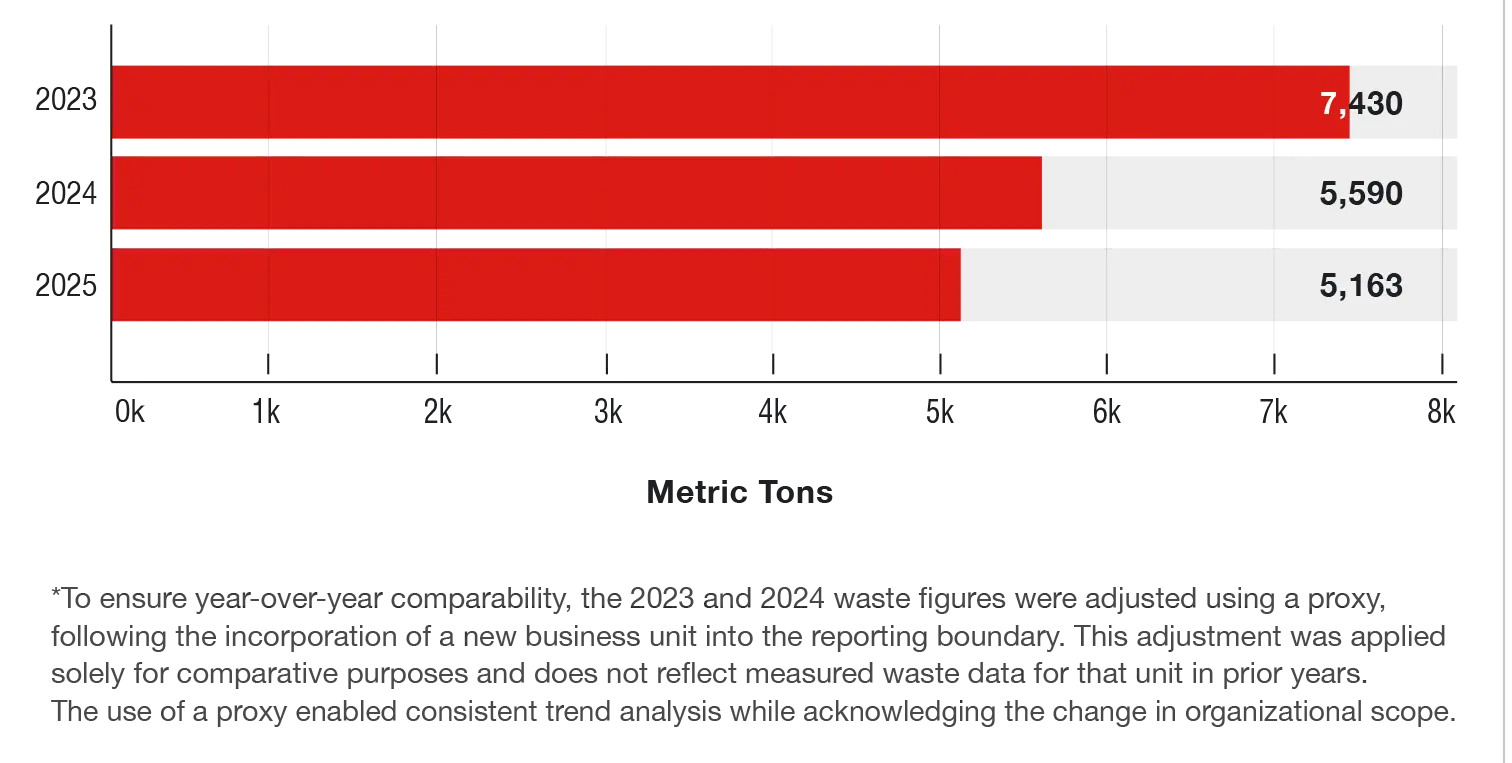
Waste Generation & Trends

Between 2023 and 2025, Austin Powder achieved a significant reduction in total waste generation, reflecting operational changes, efficiency improvements and variations in activity levels across reporting units. Total waste decreased sharply from its 2023 peak (-25%), with continued reductions in subsequent years. (-8%)
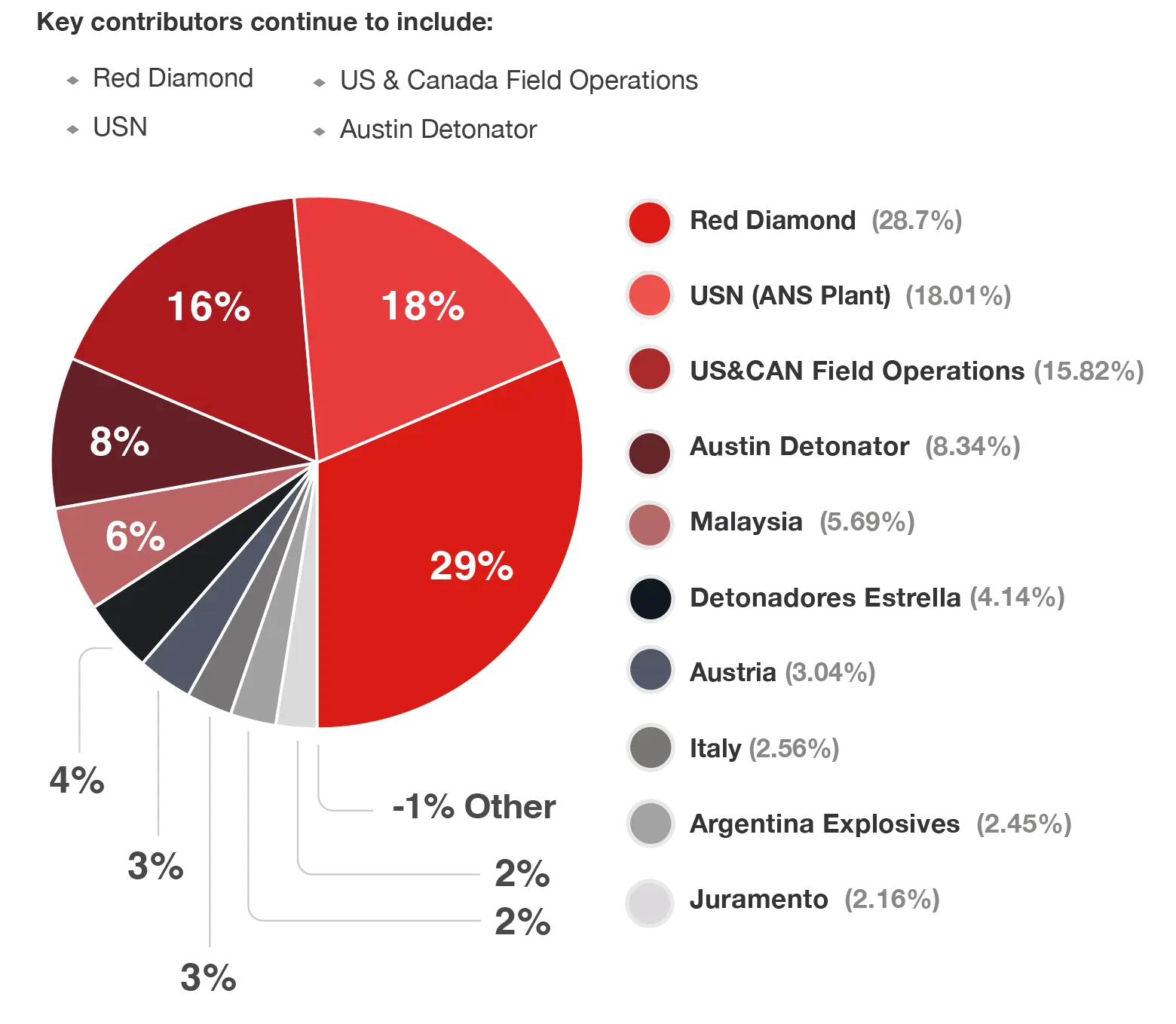
Waste Generation and Trends

Metric Tons by Reporting Unit

Despite the overall reduction in total waste volumes, waste-generation patterns remain highly concentrated, with a limited number of reporting units accounting for the majority of waste generated globally.
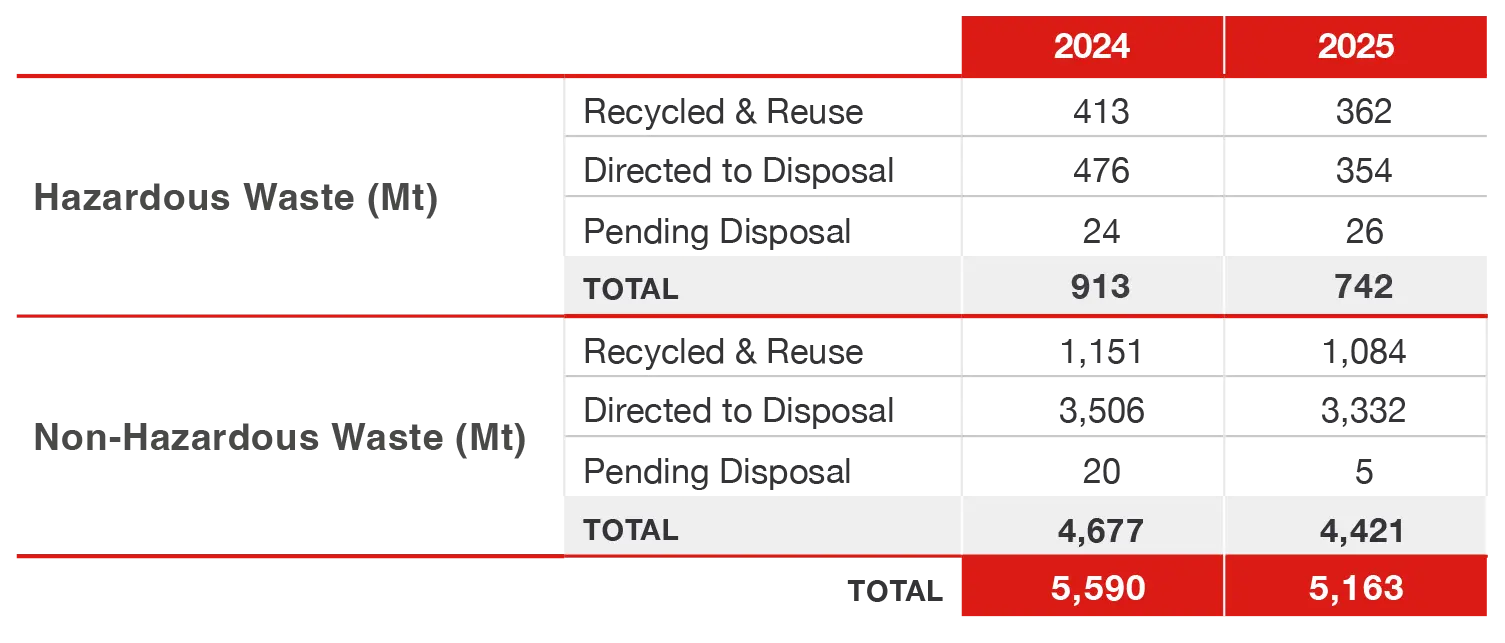
Hazardous & Non-Hazardous Waste Distribution & Treatment

In 2025, the composition and treatment of Austin Powder’s waste streams showed a mixed performance across hazardous (HW) and non-hazardous (NHW) categories. Hazardous waste generation decreased compared to 2024, with a reduction in both recycled and reused materials and waste directed to disposal. Pending disposal volumes remained broadly stable year-over-year, indicating consistent handling of hazardous waste awaiting treatment.
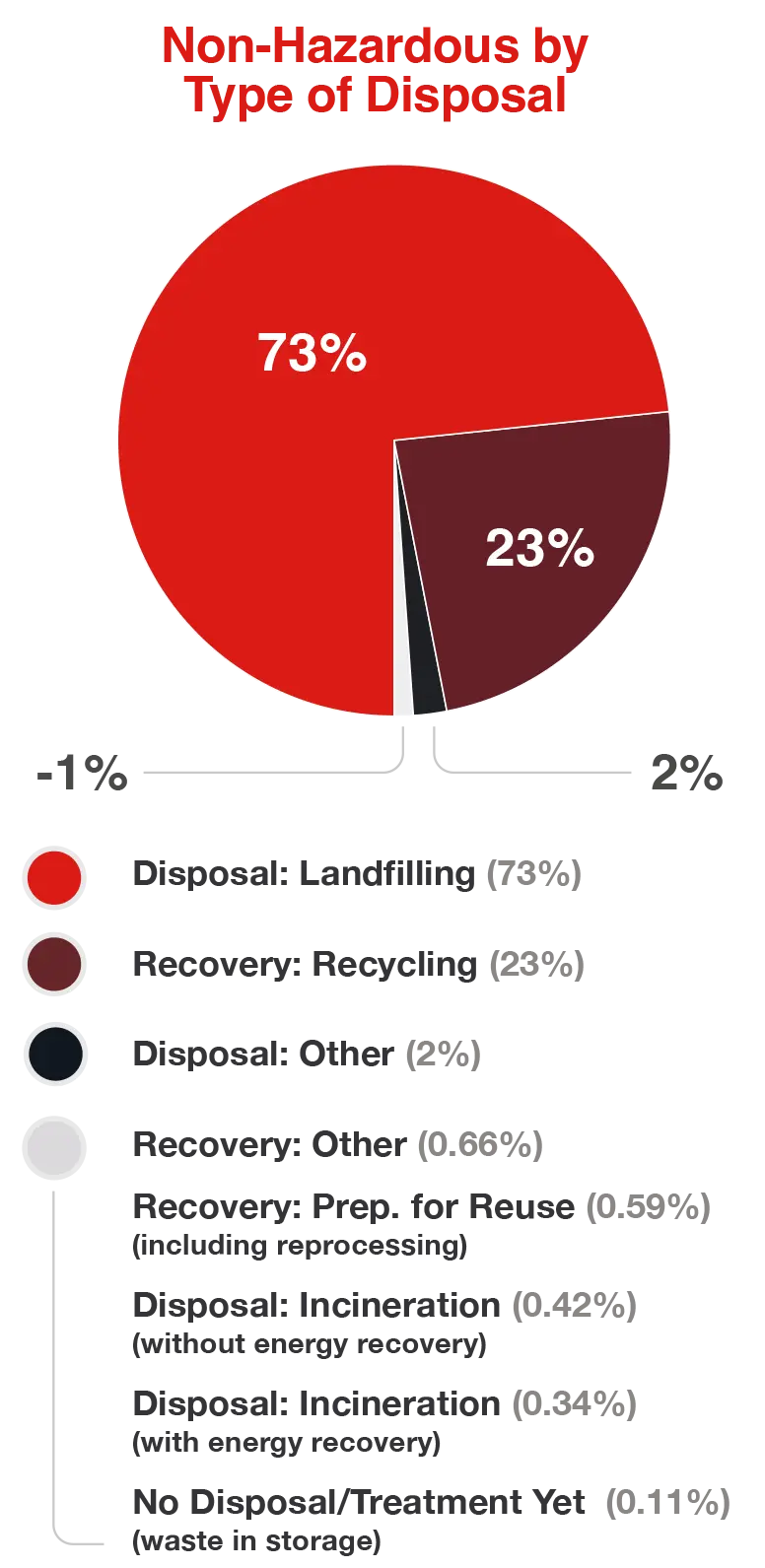
For non-hazardous waste, total generation also decreased compared to the previous year. Recycling volumes fell slightly, while the amount of non-hazardous waste directed to disposal— primarily landfill—also decreased, though it continues to represent the largest share of NHW management. Pending-disposal volumes for non-hazardous waste declined sharply, pointing to improved processing and shorter retention times on site.
Hazardous and Non-hazardous Waste Distribution and Treatment Table
Overall, while total waste generation continued to decline in 2025, and the recuperation (recycled and reuse method) rate remained stable on 28%, the treatment profile shows opportunities to strengthen recycling and reuse pathways, particularly for non-hazardous streams, and to reduce reliance on disposal routes—supporting alignment with the waste-management hierarchy and circularity principles.

A more in-depth analysis of the final disposal of the various types of waste generated shows the following distribution according to their hazard classification:
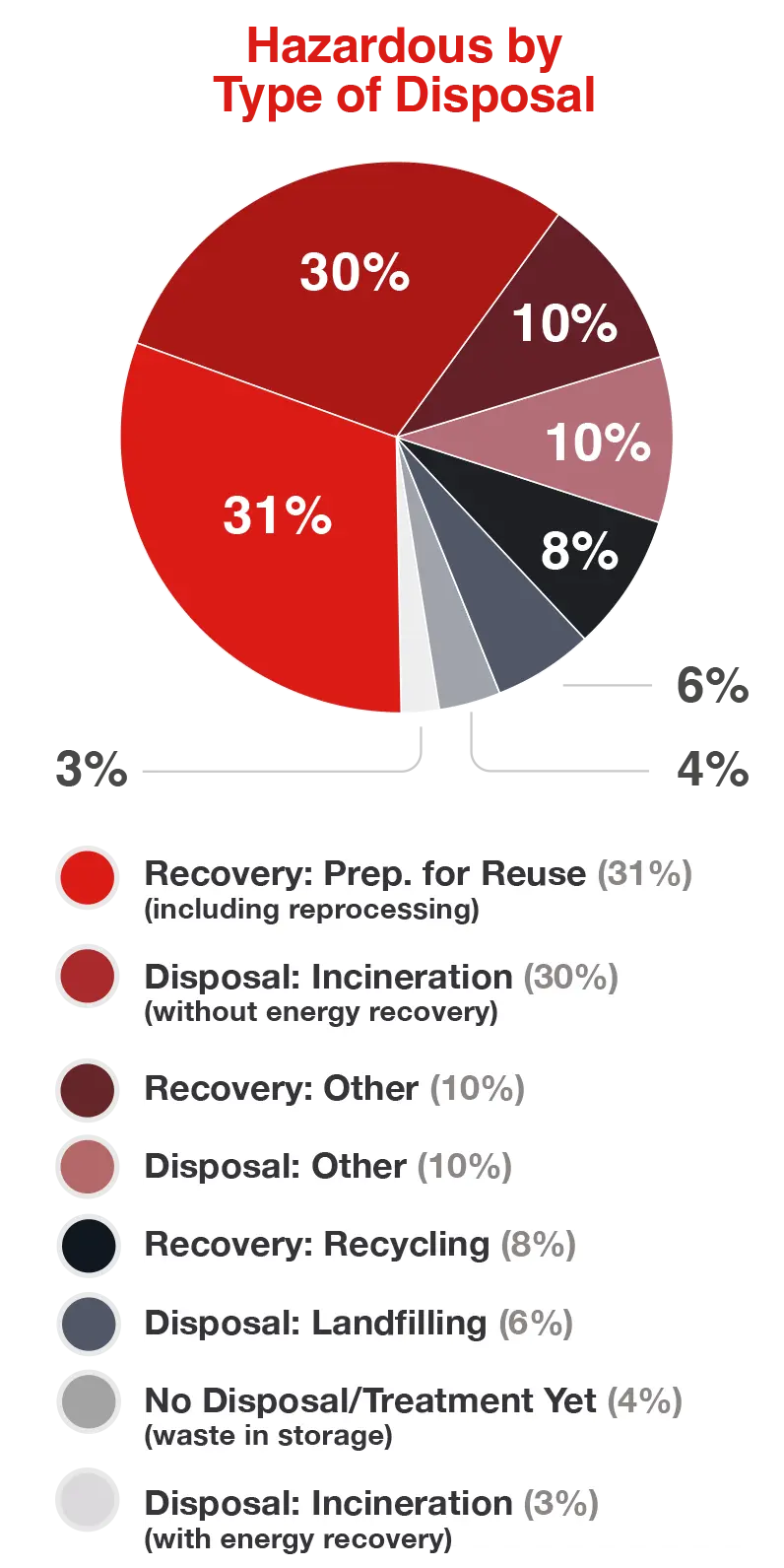
Hazardous Waste Distribution and Treatment Circle Graphs
Non-hazardous Waste Distribution and Treatment Circle Graphs
It should be highlighted that 49% of hazardous waste is either recycled or reused, a significant part of it being off-spec emulsions from cartridge and bulk plants, which are recycled in the production process for their reprocessing. This initiative keeps growing within the company with new installations in recent years.
Incineration without energy recovery is the second most used disposal method, mainly due to the internal treatment of explosive waste.
Overall, Austin Powder’s waste performance in 2025 reflects meaningful progress in reducing total waste volumes, alongside clear challenges in maintaining preferred waste-treatment outcomes, particularly recycling.
Several initiatives have also been rolled out across the different regions to mitigate the environmental impacts associated with waste management, as detailed below:
Mexico introduced a controlled reuse approach for big bags. A validation process defined a safe service life, allowing three reuse cycles before final treatment with authorized waste handlers.
Juramento eliminated disposable plastic containers in the dining area and phased out plastic water bottles, introducing reusable personal refill bottles instead.
ASD/DE Introduced circularity into their process by reprocessing Shock Tube waste to produce plastic detonator components.
Panama promoted internal paper reuse and recycling initiatives, implemented the co‑processing of non‑recyclable waste, and replaced paper envelopes with reusable folders for internal courier services to reduce printing and single‑use materials.
USN worked on internally treating the Compressor Blowdown Waste to be able to send the stream to the public wastewater treatment plant rather than sending it off as a waste to be disposed to landfill.
At Detonadores Estrella, shock tubes that do not reach the required production length are reprocessed within the detonator assembly lines. These tubes are sent to the scrap and rework area, where they are cut into shorter loops and reintroduced into the assembly process, preventing them from becoming waste.
To prevent waste in the production and service processes, raw materials are ordered in bulk whenever possible.
Recycling of recoverable materials, including cardboard, paper, metal, scrap metal, glass and bags.
Reuse of containers and plastic packaging blocks to reduce waste generation.
Performing quality control processes to detect faulty products early on in production, preventing the accumulation of significant waste at later stages.
Implementation of training programs aimed at minimizing waste and improving overall waste management practices.

AUSTIN

DETONATOR

We are a traditional manufacturer of initiation systems for industrial blasting operations and an important technological and research base for production and further development of initiation systems.

Visit Site

AUSTIN POWDER

SERVICE CZ

Austin Powder Service CZ implements the latest technologies and products for blasting works, such as laser profiling, electronic modeling, and electronic detonators.

logo_white

We use cookies to personalize and improve your site experience, to see how you use our website and to integrate with social media. You have the option to "Accept All Cookies" or "Reject Non-Essential Cookies". Please refer to our Privacy Policy for more details.